
-
01273 524000
-
01273 621444
-
info@arkafunerals.co.uk
Find out more about Direct Cremation through Arka
There is much publicity and advertising around direct cremation and for many reasons it’s clear that this may be a preferable option for many.
Whilst it is a viable option it’s important to know how some direct cremation options differ in what is offered. At Arka Original Funerals, you know that your loved one is cared for at our local Brighton premises within the Hanover area. You can come and sit with them here and take your time to say goodbye in whatever way you feel you need. The person can be dressed in clothes that they may have requested. You can place items with them, you can put a last letter in their hand. You can play music that you enjoyed together and say goodbye to them in person.
Our offer differs very much from national companies that provide this service, for instance you may not know where the person is prior to the cremation, it may not be clear where the cremation will take place or who is providing this service. These things may not concern you (and that’s absolutely fine) but if you do want to know that they are in the care of a local company and you want the option to say goodbye in person then you can get in touch if this is something that you feel is right for you.
For more details click here.

FUNERAL ARRANGER AND SUPPORT VACANCY
Full Time 24 hours per week over 3 days.
Permanent (after passing a 6 month probationary period)
Salary after probation £16,848 (pro rata from a full time salary of £28,080)
Probation salary £15,600 (pro rata from a full time salary of £26,000
Arka Original Funerals is a vibrant, modern funeral directors. We specialise in bespoke, beautiful funerals. Working with a wide range of clients in the Sussex area we support people to make the right choices for them and their friends and family when someone dies. We can arrange and support highly formal religious ceremonies through to the most unique events and direct cremation.
We now need to recruit a part time funeral arranger to support the business in our day to day operations.
We are looking for a self-motivated, confident individual who shares our passion for choice and quality of service. You will need to be calm, respectful and organised. We are looking for someone who has good attention to detail, the person in this role will need to notice the small details that contribute to our high standards of presentation. The role is a hybrid from the traditional role of Funeral Arranger, we would like to employ someone who can support families to arrange funerals but also support practically on the day of the funeral and get involved in the practical day to day operational side of things. For this reason you will also need to be physically strong (our test would be to lift a 11 stone person up or downstairs on a stretcher with one other person). You will be involved in all practical aspects of our work and for that reason need to be entirely and intrinsically trustworthy and respectful.
The working days will normally be our office opening hours but this can and will vary in this role and you will also be on-call for one week in five (additional payments are made for being on-call and if you are called out). We welcome applications from people with or without previous experience.
Please click here to download the full job description and person specification for further details. If you are interested in applying for this role please send your CV and covering letter to Sarah Clarke-Kent, Arka Original Funerals, 136 Islingword Road, Brighton BN2 9SH or email to sarah@arkafunerals.co.uk.
Closing date Friday 30th October 2022 5pm. 1st round interviews are scheduled for Thursday 10th November 2022.
If you haven’t heard back from us by this date please assume that on this occasion you have been unsuccessful. Thank you for your interest in this role and in Arka Original Funerals.

It is with profound sadness that we let you know that Peter Murphy, CELEBRANT, ACTOR, MUSICIAN, SINGER, HUSBAND, FATHER and FRIEND, died suddenly on 26th January this year and his funeral brought Lewes to a standstill on Friday 11th February.
He has been a fellow collaborator at ARKA for many years and supported many, many families with meaningful, beautiful ceremonies – of course, funeral ceremonies, but also weddings, baby namings and life transitions, not only in Brighton but country-wide. Peter was a generous, sensitive, beautiful, gentle man, such a creative force, and he will be missed hugely as we gather ourselves and move forward. We wanted to inform as many people as possible as he has touched so many lives in our community.

Some time ago a filmmaker approached us, as well as other funeral directors, to film us as we worked with families whilst supporting them with their funeral arrangements. It was a difficult decision but we felt an important piece of work to be done to enable the public to be more informed and empowered throughout the process of saying goodbye. We would like to say thank you to the families who allowed Rehana Rose to film at such poignant moments and to Rehana herself for putting together such a beautiful piece of work.
NOW AVAILABLE TO VIEW ONLINE:
https://ponderproductions.gumroad.com/l/deadgoodfilm

For more information: www.deadgoodfilm.com and follow on twitter @DeadGoodFilm
The funeral of a loved one is an important, meaningful event in anyone’s life. Being able to help carry the body of the person who has died is an honour for a lot of people. For some it’s the last thing that you can practically do for someone. Doing it safely is obviously important, to ensure that things go well. Here is our advice and approach for people to consider and to give confidence ahead of taking on this important role.
Coffins can be heavy though so when we are approaching this we need to keep people safe to ensure that no one gets injured and to ensure that the carrying of the coffin is a good memory and something that you can feel proud of.
We have some basic rules when we are approaching pallbearing, this is for professional pallbearers and family members alike.
Organise enough people to carry the coffin
This will be based on weight of the person and coffin, some coffins weigh quite a lot on their own – some up to 30kgs so we need to ensure that we are aware of the potential risk.
Another consideration is distance, if the walk into a church is long, maybe the minister will walk slowly in front of the coffin then this needs to be considered.
Height and strength of the people carrying
It’s totally acceptable for anyone who wants to, to carry a coffin. Traditionally this is the role of 4/6 men but in today’s world, women and children can perform this role as well. Again though we must think about the relative strength and confidence of each individual and of course not assume that just because someone is male and 6’ that they will have a certain amount of strength to offer. We must also consider any injuries that people may be carrying.
Process of organisation
When organising who will carry and where we need to remember:
- The ‘head’ end of a coffin is usually heavier than the ‘foot’ end, so the stronger people would normally carry the head end.
- The coffin is normally carried in feet first, it will also be put in a car feet first.
- Some coffins have weightbearing handles, some don’t. If the coffin is a traditional (wood or wood veneered) then quite often the handles are plastic and won’t be weightbearing.
- A lot of our coffins have strong weightbearing handles (normally 6) so people can carry in hand which is slightly less daunting than carrying on shoulder.
- Another option is to use a bamboo stretcher to carry a coffin this is a good option if there are people of different heights and if the coffin doesn’t have weightbearing handles.
- If you do want to carry on shoulder then we have to plan this very carefully so that everybody lifts together, bring out of the car in hand and then raise onto shoulder together, we need to give instruction on where we will lift, how we will go back into hand before the coffin is placed on the catafalque (traditionally the platform that the coffin sits on at a crematorium) or onto trestles.
BURIALS
When we are carrying the coffin to the grave, we adhere to the rules above but there are certain aspects of a burial that need to be highlighted and processes to be followed. Here are the main points to remember:
Process
Normally the coffin is taken out of the car/hearse and carried to the grave (either on shoulder or in hand)
The coffin is placed on the ground over 2 or 3 strips of webbing (like seatbelt material which is used to lower the coffin)
The webbing is threaded through the handles of the coffin by the bearers.
The pallbearers carry the coffin using the webbing over the grave onto what are known as putlocks (the 2 bits of wood over the grave) when approaching a move we will normally count to three (so ‘1 2 3 lift’)
They will need to place the coffin in the middle of the grave so that it doesn’t catch the edge of the grave as it’s being lowered.
Quite often the coffin won’t be lowered until the ‘committal’ or final goodbye has been said but this is slightly different with all funerals.
The celebrant or minister will indicate that the coffin is to be lowered and the bearers will lift the coffin up a few inches with a firm grip, allowing someone (sometimes the funeral director) to remove the putlocks.
The pallbearers will then gently lower the coffin into the grave, going down steadily and evenly is the secret here. Important not to wrap the webbing around your hands, as tempting as that is.
Once the coffin is settled evenly at the bottom of the grave they will then leave the webbing by their feet, tradition dictates that pallbearers then bow to the person who has died but this can be discussed when the funeral is being arranged.
GENERAL RULES
PLEASE LISTEN TO YOUR FUNERAL DIRECTOR WHO WILL DO EVERYTHING IN THEIR POWER TO ENSURE THAT THINGS GO SMOOTHLY AND WILL KEEP YOU SAFE.
DON’T DO ANYTHING UNTIL YOU FEEL CONFIDENT AND ARE SURE OF WHAT YOU ARE DOING.
WE WILL GO THROUGH EVERYTHING AGAIN BEFORE WE LIFT THE COFFIN SO DON’T WORRY – BE CONFIDENT
DON’T BE AFRAID TO SAY THAT YOU DON’T THINK YOU CAN MANAGE SOMETHING OR IF YOU HAVE ANY WORRIES AT ALL.
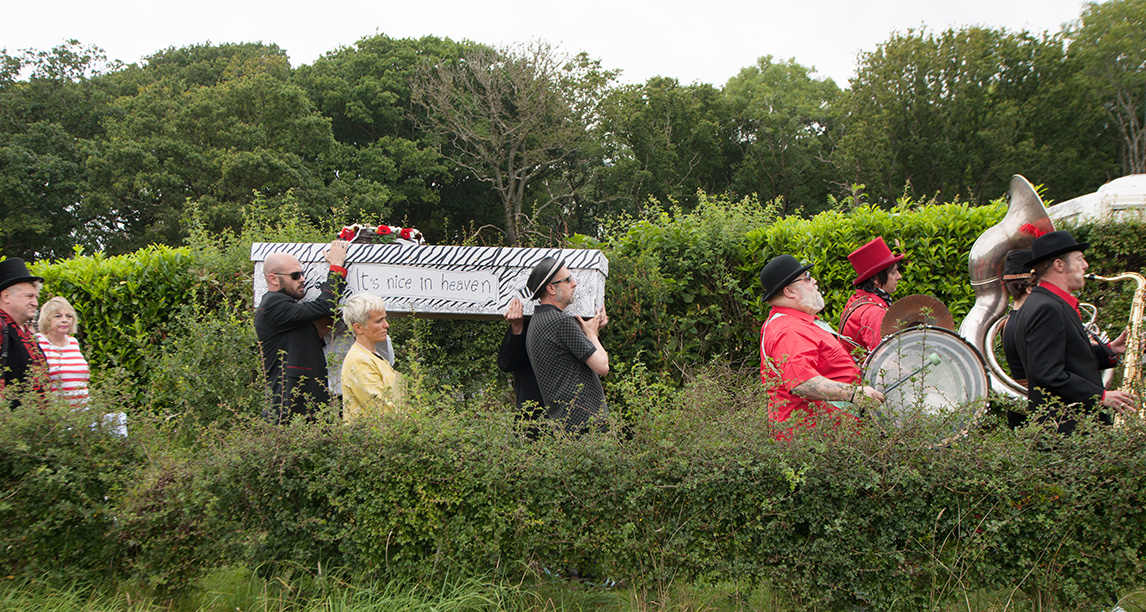
Death is one of the most difficult life events. When a person loses someone they love it can have a devastating effect on their life. It can impact their physical and mental health and their emotional wellbeing. This can be a temporary change or it can last for years or maybe forever. One thing that can make a real difference is the support that the person gets in the short, medium and long term. This support will essentially come from friends and family members. It may come from professionals involved in the grieving person’s life but the most important help will be from the people who are closest to them, who may also have known the person who died.

Offering Support
At Arka, we have worked with grieving people for many years and also hold a support group for people who have suffered the death of a loved one. From talking to people, we felt there was more help needed in supporting friends and family to care for grieving people. Our experience shows us that people can be fearful of bringing up the subject of death. Or of talking about the person who has died, in case it upsets the grieving person. There are so many reasons why this may be difficult including cultural norms, or perhaps the way the person died.
What we do know is that it can be quite lonely facing this on your own. Gentle support and an acknowledgement of what the person is going through can make such a difference. We have put together this post to share some of our ideas for how to support someone who is grieving. Here’s what we think can help……
Firstly, if you’ve not experienced the death of someone close then gaining an understanding of what the person may be going through is a good starting point. Let’s say that the person you are supporting is your friend.
Your friend may feel a number of things immediately after a death:
Shock: Even if the death was expected it may take your friend a long time to grasp what has happened. The shock can make your friend numb, and some people at first carry on as if nothing has happened. It is hard to believe that someone important is not coming back. Many people feel disorientated – as if they have lost their place and purpose in life or are living in a different world.
Pain: Feelings of pain and distress following bereavement can be overwhelming and very frightening.
Anger: Sometimes bereaved people can feel angry. This anger is a completely natural emotion, typical of the grieving process. Death can seem cruel and unfair, especially if your friend feels someone has died before their time or when they had plans for the future together. They may also feel angry towards the person who has died. Or angry at themselves for things they did or didn’t do or say to the person before their death. They may just feel angry that they are seemingly out of control of their emotions and their life suddenly.
Guilt: Guilt is another common reaction. People who have been bereaved of someone close often say they feel directly or indirectly to blame for the person’s death. Your friend may also feel guilt if they had a difficult or confusing relationship with the person who has died, or if they feel they didn’t do enough to help them when they were alive.
Depression: Many bereaved people experience feelings of depression following the death of someone close. Life can feel like it no longer holds any meaning and some people say they too want to die.
Longing: Thinking that they are hearing or seeing someone who has died is a common experience and can happen when one least expects it. Your friend may find that they can’t stop thinking about the events leading up to the death. “Seeing” the person who has died and “hearing” their voice can happen because the brain is trying to process the death and acknowledge the finality of it.
So you are left trying to navigate around these emotions, sometimes it may feel easiest to just avoid the subject altogether. Understanding that the person may feel some of these feelings at any one time and in any order can help in your approach to them. People who have been bereaved may (or may not) want to talk about the person who has died (but it’s good to have the choice!). One of the most helpful things you can do is simply listen, and give them time and space to grieve. Offering specific practical help, not vague general offers, can also be very helpful. Here are some ideas for how to support someone who is grieving:
Do:
- Be there for the person who is grieving – pick up the phone, write a letter or an email, call by or arrange to visit.
- Accept that everyone grieves in their own way, there is no ‘normal’ way.
- Encourage the person to talk.
- Listen to the person.
- Create an environment in which the bereaved person can be themselves and show their feelings, rather than having to put on a front.
- Be aware that grief can take a long time. A lot of people feel that support is there in the immediate time after the death but that can disappear and you are left on your own.
- Contact the person at difficult times such as special anniversaries and birthdays.
- Mention useful support agencies such as Cruse Bereavement Care, also many hospices offer counselling and group support after a death.
- Offer useful practical help.
Don’t:
- Avoid someone who has been bereaved.
- Use clichés such as ‘I understand how you feel’; ‘You’ll get over it ; ‘Time heals’.
- Tell them it’s time to move on, they should be over it – how long a person needs to grieve is entirely individual.
- Be alarmed if the bereaved person doesn’t want to talk or demonstrates anger.
- Underestimate how emotionally draining it can be when supporting a grieving person and do make sure you take care of yourself too.
Understanding Why
Understanding why this can seem hard to do can go some way to alleviating the awkwardness. Seeing our friends or family members upset can be difficult for us and potentially embarrassing for them. It may be that going for a walk with the person could be a good thing to do. So that you aren’t face to face with them and that silences are easier to cope with. Making direct eye contact with someone can put the person on the spot to come up with answers to how they are feeling. When there really are none, the person is dead and they are just missing them terribly. This isn’t something that we can put right, there are no answers just gentle support and kindness is what’s needed.
In summary, a lot of the time it’s the thought of getting it horribly wrong that stops us offering support in the first place. Your friend or family member will need support during this time. Just asking questions, listening, being there for them will go a long way and your relationship with them will be deeper and more trusting because of it. The last thing to mention is that grief affects people’s lives for a long time. The person will feel the loss for months and years possibly in one way or another so keep talking and keep listening. Thank you for reading, we hope that this guide for how to support someone who is grieving has been helpful.
Here is the latest window at our office in Surrey Street, we are proud to own a beautiful old VW Campervan and are offering this to customers as an alternative to the traditional hearse. A lot of families remember happy holidays using a VW Camper and so why not bring back these lovely warm memories whilst celebrating the person who has died. This is just one idea that people can consider as they put a beautifully bespoke funeral together.
We offer preplanning meetings (free of charge) where you can discuss what you would like for your funeral or that of a loved one. By doing this of course you are not obliged to use our services when the time comes but having your notes typed up and sent to you will serve as a really helpful document for your friends and family. Knowing what you want (and what you don’t want!) will help your loved ones through a really difficult time. Call us on 01273 766620 to make an appointment if you want to do this.

Are you hoping to plan a funeral on a budget? We are constantly being bombarded with the headlines that funeral costs are rising fast! As funeral directors we know this is not the full story and is not necessarily true and it’s just a mechanism to scare people into buying funeral plans. The questions remain however, how do you plan a low-cost funeral without compromising on the quality? How do you put together a funeral on a budget? Some people think that this would then be a simple funeral and not necessarily respectful to the person who has died. Well… at Arka Original Funerals we have been helping people to put together low-cost funerals for years and these are a few of our tips!

Discuss what your loved one would prefer before they die
It sounds really tricky (and only you know if the person who is ill would cope with this type of discussion). In our experience a lot of people don’t want relatives to spend a lot on the funeral and writing these decisions down can save a lot of time, worry and (sometimes) arguments. At Arka we have a really good questionnaire that we can send out for people to use, it asks a lot of practical questions but also records messages for people and things like a favourite book or a recipe to pass on, it’s an interesting process to go through and much easier when you are well so why not do something like this today?
NO FUNERAL!!
A lot of people these days are choosing to be buried or cremated with no funeral ceremony, maybe a memorial ceremony or service later on. This is getting more popular and of course this will help you keep you within budget. At Arka we believe in ceremony, we believe in the healing power of everyone coming together to remember the person and say goodbye but it’s not for everyone, if it’s not needed then don’t feel you have to put a ceremony together.
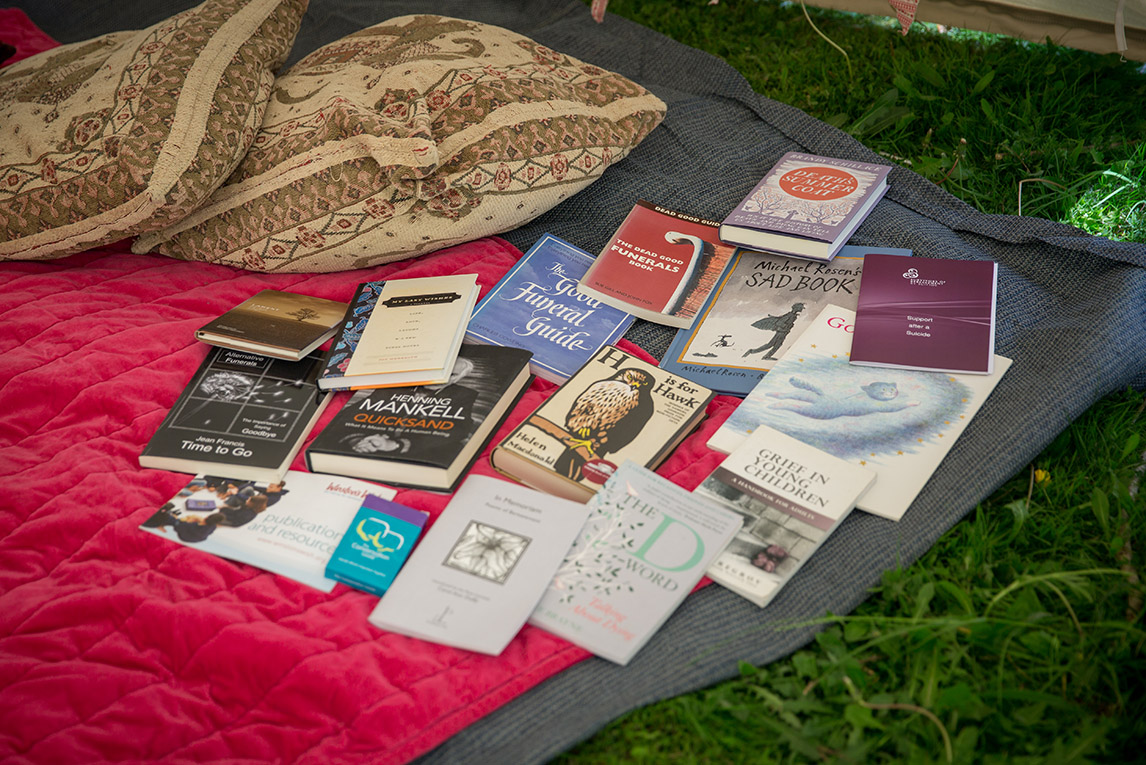
Be prepared
If someone dies in a hospice or care home their relatives can immediately be put under pressure to choose a funeral director (who will then ask lots of questions about burial or cremation etc) knowing some of these answers and not getting swept away with other peoples’ recommendations will help you remain in control of arrangements and importantly… costs.
Have a list of questions that are important for you to have answers to. Remember you are paying a funeral director for their support so ensure it is the right support.
Question examples
- Tell me your professional fees and what they include
- Do you embalm?
- If a body is not embalmed can I still come and view? (there is no regulation to say no)
- Can I be involved in helping wash and dress the body? (again no regulation why not)
- Can I supply my own coffin (may find cheaper on line of from another funeral director) If so will they charge a handling fee
- Can I use my own vehicle as the hearse?
There are many questions that can be asked and should be asked before you make your decision. Shop around, get quotes, find out as much as you can about what people are offering and how much they will charge. Take your time to decide.
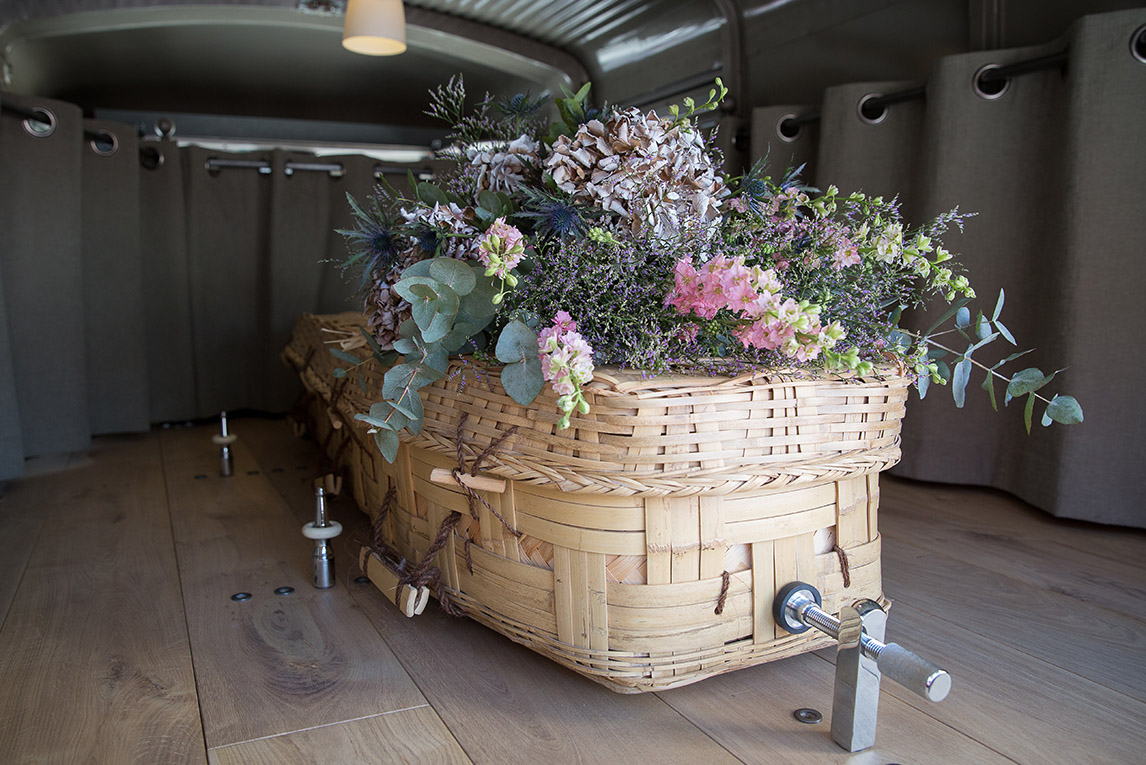
Do as much as you can yourself
So did you know that (…..drum roll….) you don’t have to use a funeral director? If someone is being cared for in a mortuary or is at home then if you want you can make all the arrangements yourself and there are lots of people and organisations out there to help you (Good Funeral Guide and The Natural Death Centre are probably the best). If you don’t feel confident to do everything yourself then you can do some bits like transporting the person yourself, pall bearing (basically anything that the funeral director does, you can do too). The options are endless but from the immediate care of the deceased to catering at the wake afterwards, this will all help you keep costs down.
Choices
Did you know that most crematoria offer cheaper funeral slots in the morning? Also some charge a staggering amount whereas one 10 miles down the road will charge a lot less, worth finding out about!
Coffin choices, maybe you could order a coffin on-line and get it delivered to your funeral director, worth checking with them first of course, they may charge additional handling fee.
Also once you have spoken to your funeral director and have reviewed the notes and costs, it’s okay to change your mind about things. Be empowered in the relationship, easier said than done when you are grieving but you can change your mind, it’s fine.
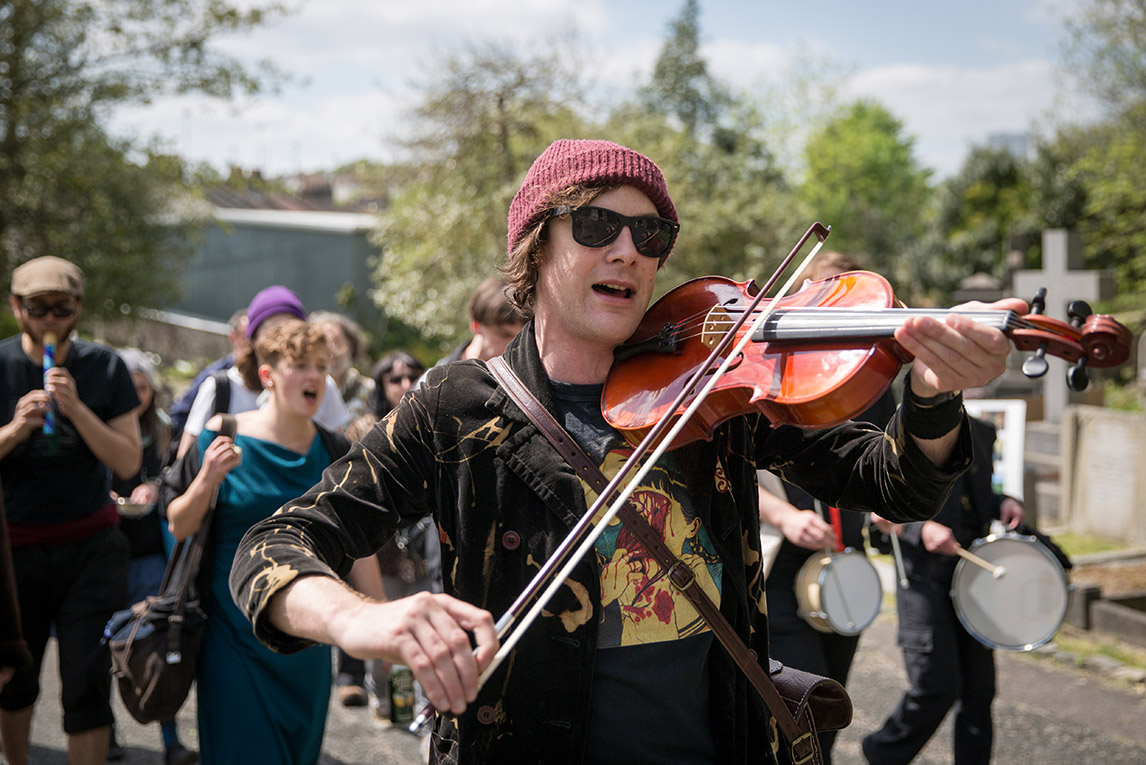
Words and sentiments are everything
The words you use at the funeral, the music you choose, the way you conjure up the spirit of the person…. That’s what people will remember, that’s what’s comforting later on. Getting the words and music right costs nothing so a bit of time and deep thought about the person will (in the end) cost nothing but will be priceless in terms of saying goodbye. What’s the point of spending a lot of money on something that’s meaningless.
So there we are! A few thoughts to consider on how to plan a funeral on a budget! At Arka we don’t do a hard sell with anyone, you are welcome to get advice on any of the above points by phoning or emailing. We are passionate about getting things right for people and of course budget is a huge part of that.
We just want people to talk about things now with each other so as a society we can become stronger and more honest on our thoughts around death and funerals and what they mean to us in this modern world.
Lets share, get use to the language and not be scared. Talking about death will not bring it nearer, we will feel more empowered and clearer about the choices we can make.
Arka were recently invited to be interviewed by Yasmeen Kahn at Talk Radio, and to speak on the topic of ‘alternative funerals’. Our very own Cara Mair gladly accepted the invitation and what followed was a really interesting discussion around death and the choices people have when arranging a funeral.
Yasmeen began by asking Cara whether alternative funerals and burials are becoming more prevalent – also clarifying that by alternative she meant “not the traditional way of doing things” Cara spoke brilliantly about how in years gone by it would have been the families that cared for the deceased after they died and that in many ways, today’s concept of ‘alternative’ is actually historically how things would have been done.
“I don’t see it as necessarily alternative, I see it as more human and normal”
Cara was asked to speak a little about what brought her into the funeral world and what the differences are between how we do things at Arka and how the traditional funeral industry works. They go on to discuss how people are becoming more empowered around death and how Cara is a big advocate for giving death back to the people.
“It’s really important to the whole grieving process to be involved and not to have these rights whisked away from you”
We won’t give a complete blow by blow account of the interview, it’s best listening in yourself. If for nothing else but to hear what Cara’s choice of funeral song would be!
If you missed the interview, here is a link. Cara speaks for around 14 minutes from approx 11 minutes into the show. We would like to say a big thank you to Yasmeen and to everyone at Talk Radio for inviting Cara to speak about something we at Arka are so passionate about.

Arka are excited to be hosting a ‘Last Wishes’ funeral planning workshop on Saturday 17th February. Run by the wonderful and lovely Jean Francis of ‘Circle of Life Celebrations’, who is an interfaith minister, celebrant and funeral arranger. In this workshop, Jean will guide you through the many options available and answers any questions that may arise while planning your final farewell.
Some of the topics covered in the workshop will be:
– You will have the opportunity to discuss your choices; creating a theme, being especially conscious of cost, practicalities and environmental issues.
– You can decide on a venue for the service/ceremony; choose music, poetry, readings and what to take with you. These are the memories that will linger on in the hearts of those left behind.
– You can finalise the contents of the ceremony/service; do you wish to have a gathering afterwards? How would you like to be remembered?
– You will receive a copy of Jean’s book ‘Ashes and Memorials, 60+ Ways to be Remembered’
– You will leave with a personalised folder containing your last wishes including lists and useful information for the convenience of your next of kin, for when the time comes.
If you would like to book a place on this workshop or if you would like to see more information about Jean and her funeral planning work please visit her website.
Time – 10.30 – 4.30 pm – £35.00 per person, full details given on application,
booking essential: 01403 273754

“Having planned my funeral I feel a burden has been lifted, freeing me to live my final years to the full” – Mary in her 50s